
What is jute?
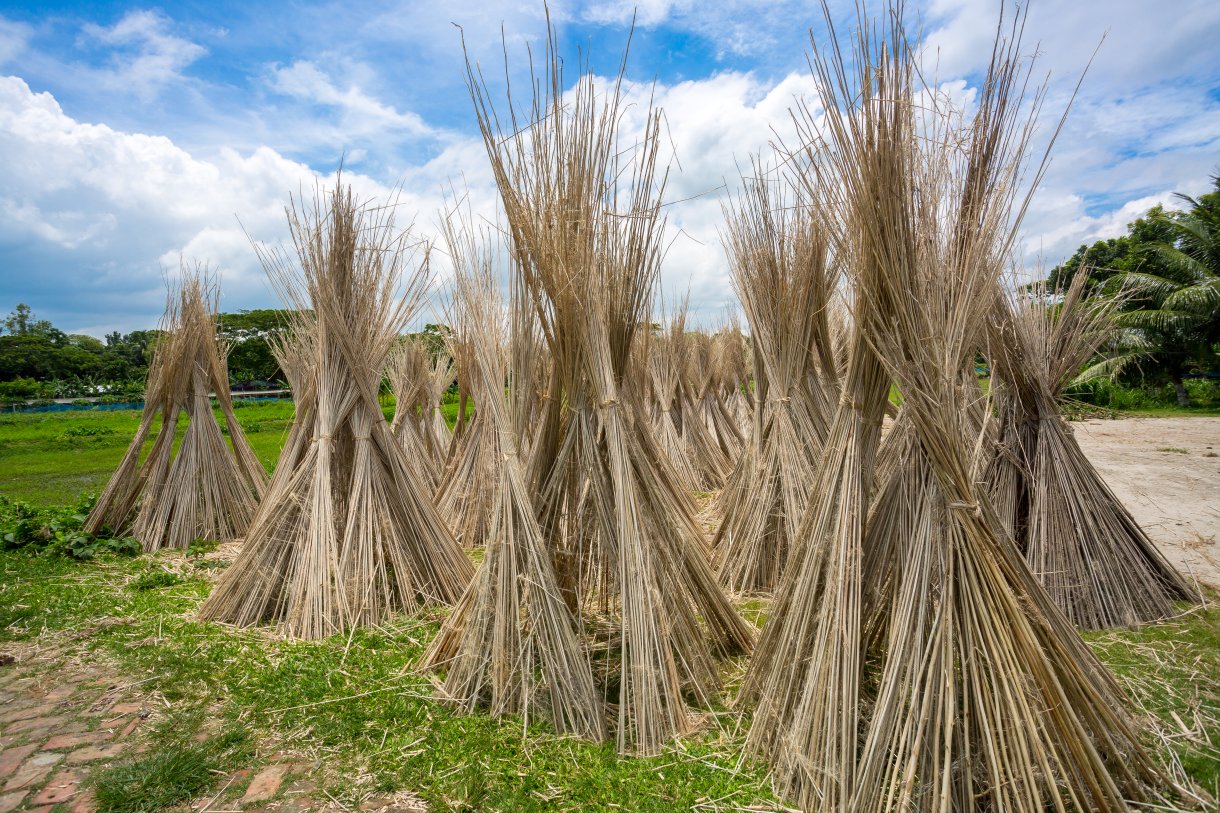
Jute is a textile fiber extracted from the stalk of the jute plant, specifically species within the Corchorus genus. The plant is grown in warm and humid climates, primarily in parts of Asia such as India and Bangladesh. After cotton, jute ranks as the second most common plant fiber in the world.
.jpg)
What is jute made of?
To understand the properties of our products, it helps to look at the chemical composition and the production process of the fiber. The jute fiber consists mainly of cellulose and lignin. The cellulose provides flexibility, while the lignin acts as a binder that gives the fiber its structure.
To extract the fiber, the stalks go through a process called retting. During retting, the stalks are submerged in water to break down the connective tissue. This makes it possible to separate the fibers from the plant's inner core. The fibers are then washed and dried before entering production.
Material properties
Jute is a durable and biodegradable bast fiber with a natural gloss and color tone. The material breathes and has low stretchability. The low stretchability means that products made from jute retain their shape over time.
A specific characteristic to consider is that the fiber is sensitive to moisture. If it is exposed to wet conditions for long periods without drying, there is a risk of rot.
Rope and twine variations
We stock different variations of jute depending on what your project requires. The two most common forms we offer are jute rope and jute twine.
- Jute rope is made of spun jute fibers. The structure allows knots to grip each other and stay in place. We frequently see it used for tying trees and bushes in the garden, and for various types of crafts. The rope is pliable and soft to work with directly from the roll.
- Jute twine is made of fine fibers and provides a thinner thread. It is a practical choice for gift wrapping and tying plants. The twine is easy to cut, and the natural roughness of the fiber prevents knots from slipping.
Jute vs sisal
When selecting materials, we notice many customers comparing jute vs sisal. Both are natural materials with low stretchability, but they handle moisture differently. We recommend our jute twine and rope for garden use, decoration, and packaging where moisture is low. Sisal offers medium moisture resistance and is suited for scratching posts, shipping, and agriculture. If your project involves constant exposure to water, we recommend hemp rope or Hampex instead.
Care and storage
Proper handling is required for your products to last over time. Because the material absorbs moisture, we recommend that rope and fabric be stored in a dry place with ventilation when not in use.
If your jute rope gets wet, let it dry outdoors in an airy space before putting it away. We advise against storing the material in closed plastic bags, as condensation creates an environment where mold thrives.
Compare our natural materials
To help you choose the right material for your project, we have compiled a comparison of the natural materials we offer. In our main category, you will find all the natural fibre ropes we stock.
Material | Stretchability | Moisture resistance | Suitable for |
|---|---|---|---|
Jute | Low | Low | Garden, decoration, packaging |
Cotton | Medium | Medium | Interior design, clothing, crafts |
| Sisal | Low | Medium | Scratching posts, shipping, agriculture |
Hemp | Low | High | Outdoor use, marine environments, construction |

Jute twine natural 1500/3 3kg
€ 27.33

Jute rope, 3-strand
€ 1.11
