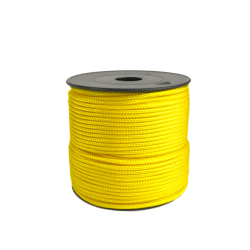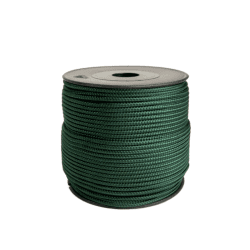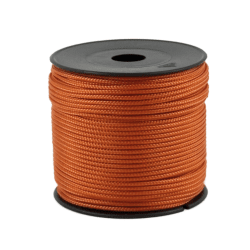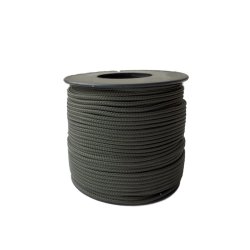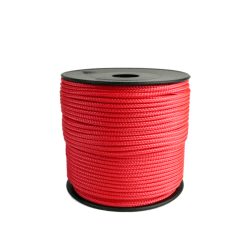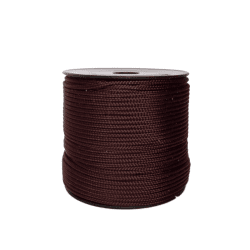

Average rating 4.6/5 based on 10 reviews.
2026-08-09
Sune
Sune
2026-08-08
2026-06-08
Per
Per
Mycket bra, men dyr frakt
2026-05-17
Tomas
Tomas
Smidigt och bra att hämta i butik
2025-07-26
Similar items

Chain, galvanized
€ 4.45
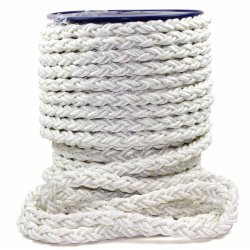
Dock Mooring Rope Multiplait
€ 2.90

Bow shackle, galvanized
€ 0.32

Thimble - galvanized
€ 0.21
![Mooring rope made of 24-braided polyester multifilament and stainless steel hook.]()
Marine blue mooring line with hook Garda 24
€ 14.14
![Strong rope for mooring, lead ropes, tow lines, etc.]()
Red 24-strand polyester multifilament Garda 24
€ 2.36
![24-strand rope with excellent wear resistance and durability.]()
Gray 24-strand polyester multifilament Garda 24
€ 2.36
![Marine blue 24-braided polyester silk rope, Garda 24, a durable and flexible rope from Knut Westberg’s ropeworks in Norrköping.]()
Marine blue 24-strand polyester multifilament Garda 24
€ 1.62
![3-strand polyester rope with high tensile strength.]()
Black 3-strand polyester multifilament
€ 1.58
![Vit 3-slagen lina av polyestersilke.]()
White 3-strand polyester multifilament
€ 0.90
![Black 24-braided polyester silk Garda 24, a durable and flexible rope ideal for mooring, towing, and various marine applications]()
Black 24-strand polyester multifilament Garda 24
€ 1.62
![Red mooring buoy with a durable outer shell made of impact-resistant polyethylene and a hollow steel rod for easy mooring.]()
Örnbojen
€ 153.80
![Danfender PE mooring buoy with a hard polyethylene shell and high-density PUR foam. Durable and secure for marine mooring applic]()
Danfender foam-filled hard plastic buoy
€ 100.16


Recently viewed products
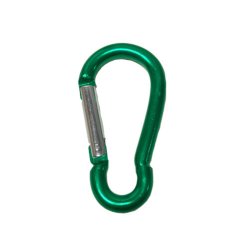
![Green fire carabiner made of aluminum with a spring-loaded latch. Lightweight, corrosion-resistant, and ideal for quick connecti]()
Snap hook, Green
€ 0.52
![Black snap hook for connecting, e.g., ropes and loops]()
Snap hook, Black
€ 0.52
![Marking nail is a universal tool for sailors.]()
Marking nail
€ 69.32
![Pink snap hook for connection, mooring, and lifting applications.]()
Snap hook, Pink
€ 0.52
![Chafe Guard abrasion protector with Velcro closure, made of polyester silk with a reinforced rubber-coated cover. Ideal for prot]()
Chafe Guard
€ 9.34
![Purple fire carabiner made of aluminum with a spring-loaded latch. Lightweight, corrosion-resistant, and ideal for quick connect]()
Snap hook, Purple
€ 0.52


Others also bought
![Orange masonry twine for straight joints and lines.]()
Masonry twine No. 6, orange
€ 3.90€ 5.19![Red sewing twine made of 100% flax fibers.]()
Red sewing twine, 3-ply, 200g.
€ 7.41€ 9.85![Bracket holder for railings, fences, and enclosures.]()
Bracket holder chrome 38mm
€ 12.77€ 16.71![Rope fittings for stair railing rope and cord.]()
Bracket holder brass 38mm
€ 11.57€ 15.34![Green and white flax twine for tagging and crafts.]()
Green/white sewing twine, 3-ply, 200g.
€ 7.41€ 9.85![Fluorescent green twine for masonry and tiling.]()
Masonry twine No. 8, neon green
€ 3.90€ 5.19![Loop for hooks, carabiners, etc. For fastening ropes and other lines.]()
Oval fastening loop chrome
€ 4.11€ 5.44![Attachment loop for snap hooks, rope fittings, carabiners, shackles, hooks, etc. Matte chrome alloy.]()
Oval Attachment Loop Matt Chrome
€ 4.11€ 5.44![Masonry twine for construction and gardening.]()
Masonry twine No. 8, neon yellow
€ 3.90€ 5.19![Blue and white striped sewing twine made of flax. For tagging, sailor work, etc.]()
Blue/white sewing twine, 3-ply, 200g.
€ 7.41€ 9.85![Orange masonry twine for straight joints and lines.]()
Masonry twine No. 8, orange
€ 3.90€ 5.19![Beautiful red/white sewing twine made of 100% flax fiber.]()
Red/white sewing twine, 3-ply, 200g.
€ 7.41€ 9.85![Beautiful light green flax twine for tagging and crafts.]()
Green sewing twine, 3-ply, 200g.
€ 7.41€ 9.85![Blue twine made of 100% flax. 3-ply twine.]()
Blue sewing twine, 3-ply, 200g.
€ 7.41€ 9.85![Silver post for rope barriers and enclosures]()
Barrier post, RF, Silver, with flat top
€ 63.32€ 84.39![Barrier post for ropes. Suitable for museums, restaurants, hotels, exhibitions, etc.]()
Barrier Post, RF, Gold, with Spherical Top
€ 77.03€ 102.73![Svart chock cord av slitstark PES och gummi.]()
Rubber Cord (Shock Cord), Black
€ 0.56
![Paracord Black]()
Paracord Black
€ 11.06
![Hampex rope mimics real natural hemp.]()
Hampex
€ 0.76
![Paracord Red]()
Paracord Red
€ 11.91
![Hemp rope for decoration, rope fences, and hoist lines.]()
Hemp rope
€ 1.07
![Unbleached cotton rope.]()
Cotton rope, 3-strand
€ 0.62
![Elastic cord with a polyester silk cover. White color.]()
Rubber Cord (Shock Cord), White
€ 0.52
![Paracord Blue]()
Paracord Blue
€ 11.91
![Paracord Neon Orange]()
Paracord Neon Orange
€ 11.91
![Galvanized fire carabiner with a spring-loaded latch. Ideal for quick and secure connections of ropes, wires, and chains]()
Snap hook, Galvanized
€ 0.37
![Tarred marline made from the finest hemp fibers and Dalbränd wood tar.]()
Tarred marline small rolls
€ 20.99
![Bankline cord for tying, patching, securing, repairing, mounting, etc.]()
Bank line
€ 10.71
![Paracord Purple]()
Paracord Purple
€ 11.91
![Black heat shrink tubing made of durable thermoplastic, designed to protect and reinforce ropes against wear and stress.]()
Black heat shrink tubing
€ 0.05
![Wire rope clips for ropes and wires. An alternative to spliced loops.]()
Wire rope clips, Galvanized
€ 0.14
![Braided cotton rope made from 100% unbleached cotton.]()
Braided cotton rope
€ 0.26
![Dynatech rope with very high abrasion resistance and durability]()
Dynatech PRO HMPE Rope
€ 0.54
![Paracord White]()
Paracord White
€ 10.71
![Stainless steel keyrings in various sizes, ideal for crafting, paracord knots, and DIY projects.]()
Key ring, Stainless steel
€ 0.31
![String/rope for pull and control, awning line, curtain cord, tie-down string, etc.]()
Black braided polyester multifilament
€ 7.76
![Paracord Brown]()
Paracord Brown
€ 11.91
![Tarred hemp rope with a wonderful scent.]()
Extra Fine Tarred Hemp Twine
€ 35.56
![Paracord Rainbow]()
Paracord Rainbow
€ 12.42
![Paracord Neon Green]()
Paracord Neon Green
€ 11.91
![Splitting Needles Selma for Splitting Braided Rope]()
Splicing Needle HMPE
€ 7.88
![Paracord Yellow]()
Paracord Yellow
€ 11.91
![Paracord Dark Green]()
Paracord Dark Green
€ 11.91
![Paracord Dark Orange]()
Paracord Dark Orange
€ 11.91
![Tarred hemp rope for extra durability.]()
Tarred hemp rope 3-strand
€ 1.70
![Paracord Olivegreen]()
Paracord Olivegreen
€ 11.91
![Decorative rope made of synthetic material that resembles natural hemp.]()
Hempline 3-strand rope
€ 0.93
![Från 6mm till 28mm. Galvad kätting klass 4 - perfekt till bryggan och/eller bojen]()
Chain, galvanized
€ 4.45
![Vit 3-slagen lina av polyestersilke.]()
White 3-strand polyester multifilament
€ 0.90
![Double-braided hemp beige sheet, halyard, and trim rope.]()
Hemp Beige Double-Braided Sheet Rope MX Multifilament Polyester
€ 1.36
![Rock eye with wedge in hot-dip galvanized steel, designed to create a secure and permanent mooring point in rock]()
Galvanized rock eye with wedge
€ 9,00
![Black polyester multifilament chafe guard mounted on a rope for extra abrasion protection.]()
Protective cover made of polyester multifilament, tube
€ 0.01
![Paracord Clear Green]()
Paracord Clear Green
€ 11.91
![Stainless steel splicing needle with a wooden handle, designed for easy splicing of ropes and wires. The tapered tip allows for]()
Splicing fid
€ 9,00
![Paracord Beige]()
Paracord Beige
€ 11.91
![Rope made of polyester that resembles hemp.]()
Hempline 3-strand rope 500g
€ 17.05
![Straight galvanized steel shackle in use, attached to a chain and eyelet for anchoring in industrial, construction, or rigging a]()
Shackle, straight, galvanized
€ 0.39
![Paracord Navy Blue]()
Paracord Navy Blue
€ 11.91
![Hemp rope made from polished hemp yarn.]()
Hemp Twine Extra Fine
€ 12.77
![Sheave diameter from 15 to 50 mm. Double sheaves. For hoisting systems on boats, industrial applications, construction, and thea]()
Galvanized Steel Block, Double-Sheave
€ 1.67
![Flag line reinforced spun polyester]()
Flag line reinforced spun polyester
€ 0.44
![Thimble Stainless Steel. Suitable for rigging, mooring, etc.]()
Thimble Stainless Steel
€ 0.23
![Dark green braided sheet rope with a smooth and stiff construction. Designed for sailing and industrial applications requiring h]()
Dark green sheet line MX multifilament
€ 1.36
![8mm steel wire with 114 strands, made from galvanized steel for excellent corrosion resistance and strength. Flexible constructi]()
Steel wire 8mm 114-strand galvanized
€ 1.54
![Opening from 10-50mm. Material thickness from 5 to 25mm. Shackle made of galvanized steel. For lifting equipment, anchoring, rop]()
Bow shackle, galvanized
€ 0.32
![Purple MX sailing rope made of braided polyester with high abrasion resistance and UV protection. Ideal for sailboats, trim, and]()
Purple towing line MX polyester multifilament
€ 1.36
![Unbleached and natural cotton cord.]()
Natural cotton twine 500g
€ 14.48
![65-85mm. Hook with swivel for dog leashes, girth straps, cat leashes, connections of rope, chain, and rope, etc.]()
KWR Hook with Swivel
€ 1.79
![Paracord Gray]()
Paracord Gray
€ 11.91
![Spool of waxed whipping twine made of twisted polyamide, ideal for seizing, whipping, and lashing. The twine is treated with wax]()
Waxed whipping twine, red
€ 6.64
![Full view of the turnbuckle, placed on a neutral surface, ready for use in tensioning and rigging applications.]()
Turnbuckle Galvanized
€ 9.85
![Orange 3-strand polyethylene rope with high tensile strength and UV resistance. Ideal for the fishing industry and winter moorin]()
Polyethylene 3-strand, Orange
€ 0.19
![Two stainless steel beads with a polished surface, ideal for crafting and macramé. Perfect for making keychains or decorative it]()
Metal ball
€ 0.81
![Wire rope clips for ropes and wires. Instead of spliced loops.]()
Wire rope clips, Stainless steel
€ 1.11
![Reflective rope made of high-performance polyester multifilament.]()
Neon yellow reflective rope MX-Flashline
€ 0.99
![Metal rings in various sizes and materials, including chrome and brass. Ideal for use with ropes and cords.]()
Metal rings
€ 0.27
![Jute Twine]()
Jute Twine
€ 2.87
![Black flag line made of polyester for high durability.]()
Braided reinforced spun polyester – black
€ 0.46
![Brown 3-strand Danline rope, lightweight and durable. Ideal for fishing and commercial marine use.]()
3-strand brown Danline rope
€ 0.35
![Paracord Pink]()
Paracord Pink
€ 11.91
![Increases visibility. For halters, barriers, dog leashes, etc.]()
Neon orange reflective rope MX-Flashline
€ 0.99
![Black rope with integrated reflective thread.]()
Black reflex rope MX-Flashline
€ 0.99
![Black snap hook for connecting, e.g., ropes and loops]()
Snap hook, Black
€ 0.52
![Black mooring line with loop. Extremely flexible and durable line, excellent for mooring. Made of 100% polyester multifilament.]()
Black mooring rope with loop - Garda 24
€ 6.99
![Stainless steel thimble in a teardrop shape, made of AiSi 316 stainless steel, designed to protect spliced loops in ropes and wi]()
Tubular Thimble, Stainless Steel
€ 2.52
![Blue rope with integrated reflective thread for increased visibility]()
Blue Reflective Rope MX Flashine
€ 0.99
![Full view of the entire triceps rope, displayed in a natural position to showcase its length and sturdy construction.]()
Tricep rope in Hampex with black wear protection
€ 44.98
![Sheet and trim line with red marking yarns.]()
Sheet and trim line MX white/red
€ 1.24
![Approximately 1.5mm - 4.5mm. For weaving, lashing, crafts, gardening and cultivation, decorations, etc. 100% sisal.]()
Sisal twine
€ 1.76
![Lifting shackle US Redpin made of hot-dip galvanized steel. Sturdy design for secure lifting and connecting of wire ropes, chain]()
Lifting shackle, US red pin
€ 1.19
![Sheave diameter from 15 to 65 mm. For hoisting systems on boats, industrial applications, construction, and theater.]()
Galvanized Steel Block, Single-Sheave
€ 1.15
![P-ring in red-painted steel, designed for secure mooring of buoys and docks. Heavy-duty structure with angular flanges for stabi]()
P-ring, painted
€ 94.68
![Durable black plastic buckle, ideal for use on straps, bags, and dog leashes.]()
Buckle, plastic, black 15mm
€ 0.27
![Mooring rope made of 24-braided polyester multifilament and stainless steel hook.]()
Marine blue mooring line with hook Garda 24
€ 14.14
![Close-up of a strong and rust-resistant stainless steel carabiner. Ideal for leashes, lead ropes, and light lifting applications]()
Snap hook, Stainless steel
€ 2.70
![Paracord Burgundy]()
Paracord Burgundy
€ 11.91
![Braided hemp rope for decoration, hanging, gardening, etc.]()
Braided hemp rope
€ 1.07
![Single-ply hemp twine for packaging and decorations.]()
Hemp Twine, Single-Ply
€ 3.17
![Stainless steel swivel snap hook, ideal for leashes and lead ropes. Designed for maximum durability and corrosion resistance.]()
Trigger Snap Hook with Swivel, Stainless steel
€ 9.34